The Platformization Trap: Why CrowdStrike’s 2025 Threat Report Should Make Every Mid-Size Engineering Team Rethink Their Security Stack
The 62-Minute Problem Nobody Talks About
Let’s start with a number that should keep your security team awake at night: 62 minutes. That’s the average time an attacker now has between initial access and lateral movement inside your network. One year ago, it was 84 minutes. One year from now, it’ll probably be shorter. This isn’t some abstract benchmark from the CrowdStrike 2025 Global Threat Report that you can safely ignore. This is your actual operational window.
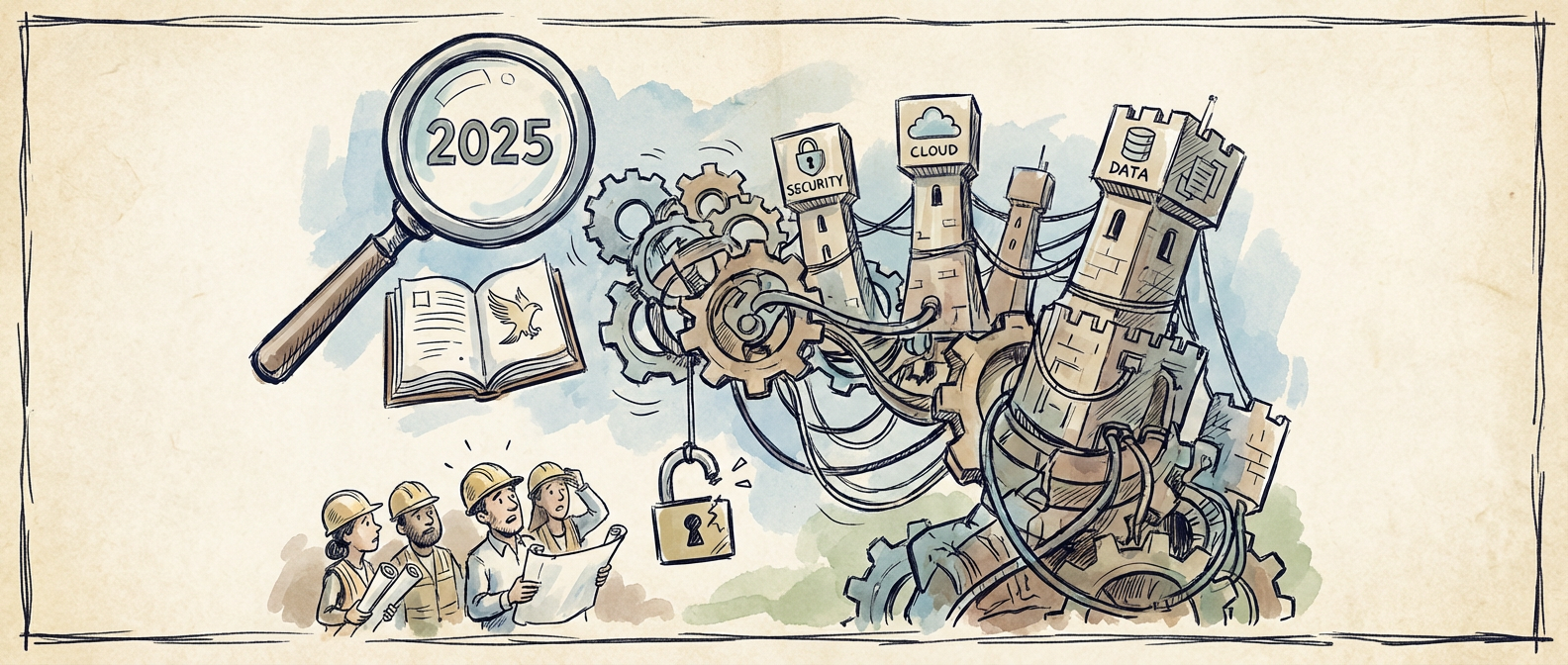
What makes this genuinely terrifying isn’t the number itself. It’s what the number represents: adversaries are moving faster. Your detection capabilities aren’t keeping pace. And most mid-size engineering organizations are still operating under the assumption that they have hours or even days to respond to an initial compromise. You don’t.
Think about your own incident response playbook. How long does it actually take from alert to triage to containment? If you’re being honest with yourself, it takes longer than 62 minutes. Which means the attacker is already inside your second network segment before your monitoring system has even finished its first coffee.

The Cloud Credential Extraction Epidemic
Here’s where it gets specific. The threat report documented a 150 percent year-over-year spike in adversary activity from China-nexus groups, with a surgical focus on cloud environments. But not cloud infrastructure itself. They’re hunting CI/CD pipeline credentials. They’re looking for your GitHub tokens, your AWS assume-role policies embedded in Jenkins, your HashiCorp Vault secrets stored in environment variables.
This represents a deliberate shift in targeting strategy. Instead of brute-forcing your cloud APIs, adversaries figured out that your engineering teams have already solved the authentication problem for them. Your deployment pipelines are soaked in credentials that grant direct access to production infrastructure. All they need to do is find them.
The uncomfortable truth: most mid-size engineering teams aren’t even scanning their CI/CD systems for leaked credentials on a regular basis. You’re running three-month-old container images in production because nobody’s rebuilt them. You’re storing secrets in environment variables. You’re committing access keys to feature branches and then rotating them manually six months later when somebody finally notices.
The Vendor Consolidation Lie
Here’s where the trap starts to snap shut. According to Gartner’s 2025 analysis, 58 percent of enterprise security buyers are now consolidating their security stack into a single platform vendor. That’s a dramatic swing from 31 percent just three years ago. The logic is seductive: one vendor, unified visibility, simplified operations, fewer integration nightmares.
I get it. I really do. Stitching together best-of-breed point solutions is painful. YAML configurations that don’t match. API response formats that make you want to scream. Vendor support teams that pass you between departments like a volleyball game. A single platform looks clean. Elegant. Operationally sane.
Then July 2024 happened. CrowdStrike pushed a Falcon sensor update that bricked 8.5 million Windows devices globally. Not hacked. Not infiltrated. Just broken. The update went live, systems blue-screened, and suddenly every conversation about vendor dependency risk became real in a way that penetration tests and threat models never quite achieve.
What nobody talks about: that incident wasn’t really about CrowdStrike. It was a case study in what happens when you place your endpoint detection, your identity threat detection, and your cloud security posture management all on a single code path that shares kernel-level access. One bad update cascades into catastrophic operational failure. One vulnerability in that unified agent potentially exposes your entire security infrastructure.
The Exploit Timeline is Collapsing
Let’s layer on one more fact. The CISA Known Exploited Vulnerabilities Catalog now contains over 1,200 entries. Of those, 40 percent are actively being weaponized within 48 hours of public disclosure. Read that again. Forty percent. Two days.
This fundamentally breaks the traditional patching model. You cannot wait for your monthly patch Tuesday cycle. You cannot schedule security updates for next quarter. If a critical vulnerability touches your stack, you need to know about it, test the patch, and deploy it within 48 hours. Miss that window and you’re likely already compromised.
Most organizations’ patch SLAs haven’t adapted to this reality. You’re still operating on the assumption that you have a week or two to respond. You don’t. The people who built your monitoring systems are thinking in days. The attackers are thinking in hours.
What Actually Works at Mid-Size Scale
So where does this leave you? First, abandon the idea that consolidation solves security problems. It doesn’t. Consolidation solves operational overhead problems. Those aren’t the same thing. You need breadth of detection across multiple vendors because vendor-agnostic visibility is your actual defense against catastrophic failure.
Second, treat your 62-minute window as your operational constraint. Design your incident response automation around that number. Your alert thresholds should assume you’re working with humans who need machine assistance to respond within an hour. Your playbooks need to be executable by your junior engineers, not just your staff engineers.
Third, lock down your CI/CD pipeline like it’s the crown jewels. Because it is. Rotate credentials monthly, not annually. Scan for secrets in every commit. Use workload identity instead of service accounts. This isn’t theoretical security posture theater. This is the actual attack vector that’s working right now against organizations like yours.
Fourth, accept that you cannot patch everything. Prioritize ruthlessly. Know what’s actually running in your production environment. Know what’s actually exposed to the internet. Know what’s actually worth defending. Then patch those things within 48 hours when exploits become public.
The platformization trap is real. But it’s not inevitable. You can build a security architecture that’s operationally manageable without sacrificing resilience. It requires accepting that elegance and safety are sometimes in tension, and that your job just got harder. But it’s the only way through.
What’s your security team’s current incident response time? Have you stress-tested your playbooks against the 62-minute window? I’d genuinely like to hear how organizations are actually solving this at scale.

How to Read Swift SIL to Verify Compiler Optimizations
How Swift’s Copy-on-Write Breaks Down Under Nested Value Type Mutation
Why You Should Understand Swift Intermediate Representation
About Author
