The Next Wave of Cloud Cost Optimization: Why Your 2019 Playbook is Already Obsolete
The Signal: FinOps is Dead, Long Live Autonomous Cost Management
I’ve watched three generations of cloud cost optimization evolve in the wild. First came the Excel warriors of 2015, manually tagging resources like digital librarians. Then the FinOps evangelists arrived with their dashboards and governance frameworks. Both approaches share a fatal flaw: they assume humans can keep pace with cloud complexity at scale.
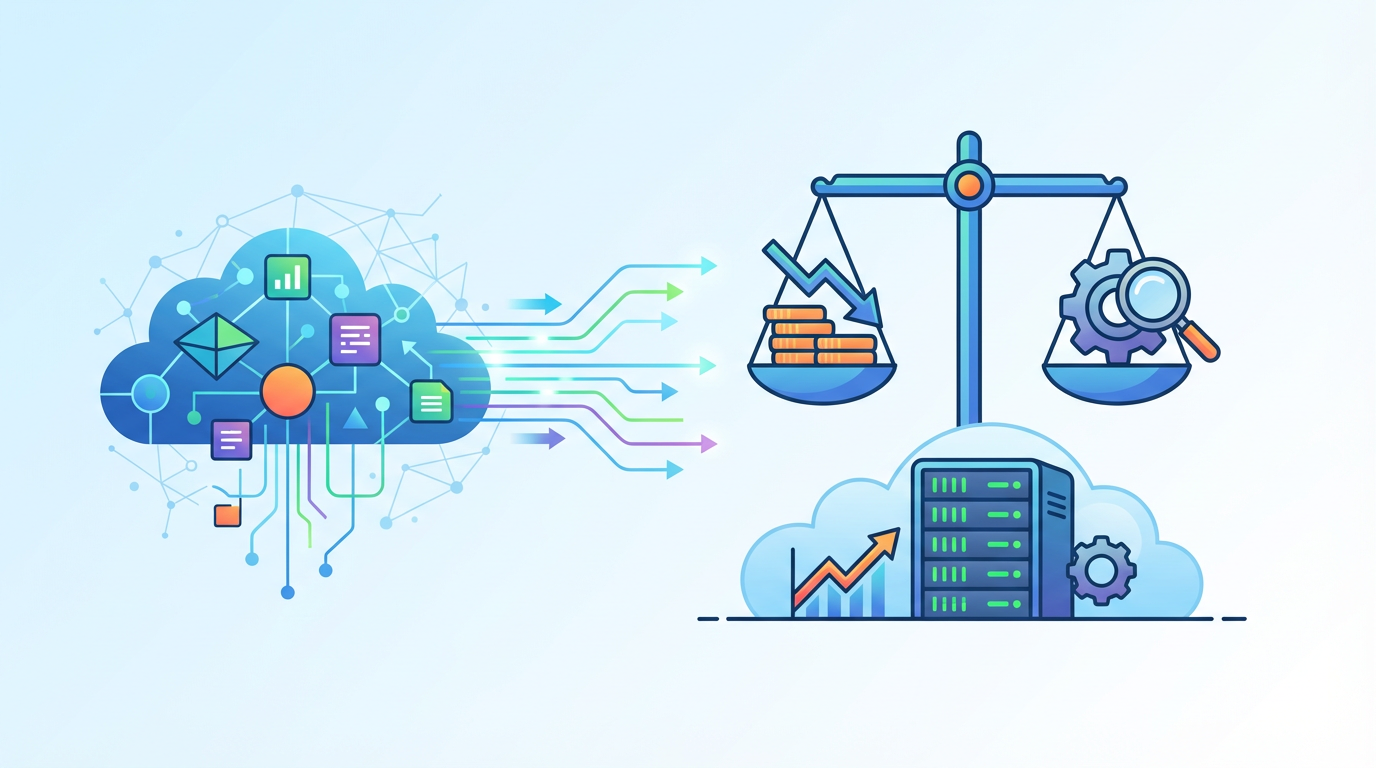
The reality from production environments tells a different story. Organizations burning through seven-figure cloud bills are discovering that traditional cost optimization is like playing whack-a-mole with a blindfold. By the time your monthly bill arrives, you’ve already blown budget on resources that should never have existed.
The companies winning this game have moved beyond reactive cost management. They’re running autonomous systems that make optimization decisions faster than any human could process the data. This isn’t some distant future. It’s happening right now in production environments where milliseconds matter and waste compounds exponentially.

Predictive Right-Sizing: When Algorithms Outsmart Engineers
Traditional right-sizing feels like guessing your teenager’s appetite before ordering pizza. You analyze historical usage, apply safety margins, and inevitably get it wrong. Machine learning models trained on real workload patterns are making these decisions with surgical precision, and honestly? The results are embarrassing for those of us who considered ourselves experts at capacity planning.
The real breakthrough isn’t just better prediction accuracy. Modern ML-driven right-sizing operates in real-time, adjusting compute resources based on actual demand patterns rather than worst-case scenarios. I’ve seen production environments reduce compute costs by 40% while improving performance metrics. The algorithms identify usage patterns that humans miss entirely, like the subtle correlation between API response times and optimal instance families for specific workloads.
What makes this genuinely exciting is the feedback loop. These systems learn from every optimization decision, building institutional knowledge that survives team turnover and architectural changes. Your infrastructure literally gets smarter about spending money efficiently. That beats manually updating Terraform configs based on quarterly reviews.
The Storage Revolution: Beyond Simple Lifecycle Policies
Storage optimization used to mean setting lifecycle policies and hoping for the best. That’s adorable now. The next wave uses content analysis and access pattern prediction to make storage decisions that would take human analysts months to identify.
Intelligent data tiering systems analyze file contents, user behavior, and application access patterns to predict storage needs with scary accuracy. They’re moving data between storage classes before applications even request it, reducing both costs and latency. I watched one implementation reduce storage costs by 60% while improving application performance because the system understood data relationships better than the development team.
The really interesting development is predictive compression and deduplication at scale. These systems identify optimization opportunities across entire data ecosystems, finding redundancy patterns that span multiple applications and teams. When your storage infrastructure can automatically eliminate duplicate data across organizational silos, you’re operating in a completely different cost paradigm.
Network Costs: The Hidden Beast Finally Getting Tamed
Network costs remain the dark art of cloud optimization because they’re invisible until they’re catastrophic. Traditional approaches involve praying to the bandwidth gods and implementing traffic shaping policies that feel like performing surgery with garden tools.
New network optimization platforms use real-time traffic analysis to route data through the most cost-effective paths automatically. They’re making dynamic decisions about CDN usage, cross-region replication, and data transfer patterns that adapt to changing cost structures faster than humans can even identify the opportunities.
The real breakthrough is predictive traffic management. These systems analyze historical patterns, application behavior, and user geography to pre-position data and optimize routing before demand spikes occur. When your infrastructure can predict and prepare for traffic patterns, network costs become a controlled variable rather than a budget surprise.
The Speculation Zone: Where This Gets Really Interesting
Here’s where I put on my fortune-teller hat and peer into the crystal ball of infrastructure evolution. The signals suggest we’re approaching a fundamental shift in how cloud resources are provisioned and optimized.
Cross-cloud arbitrage is becoming a viable strategy for large-scale operations. Autonomous systems that can move workloads between cloud providers based on real-time pricing and performance metrics aren’t science fiction anymore. They’re early-stage production reality for organizations with the technical skills to implement them.
The most intriguing development is infrastructure-as-code that writes itself. ML systems analyzing application behavior and automatically generating optimal infrastructure configurations represent a paradigm shift from human-designed to algorithmically-optimized cloud architectures. When your infrastructure can redesign itself based on cost and performance feedback, traditional DevOps practices start looking quaint.
Carbon cost optimization represents another frontier where speculation meets reality. Systems that factor environmental impact into resource allocation decisions are moving beyond marketing talking points to actual production implementations. When carbon efficiency becomes a measurable cost factor, optimization algorithms will naturally drive more sustainable infrastructure practices.
The trajectory seems clear: cloud cost optimization is evolving from a human-driven discipline to an autonomous system capability. Organizations that embrace this transition will operate with cost efficiency advantages that manual approaches simply cannot match. The question isn’t whether this future arrives, but how quickly your infrastructure can adapt to compete in it. What signals are you seeing in your own production environments that suggest this evolution is already happening?

The Real Picture on Web performance and core web vitals in 2026

Making SwiftUI Stick in Real Production Apps
Why Swift Actors Need Better Documentation
About Author
